Otto Keller · 16 September 2026
Navigating Domain Migration Pitfalls Through Revenue Page Performance Audits
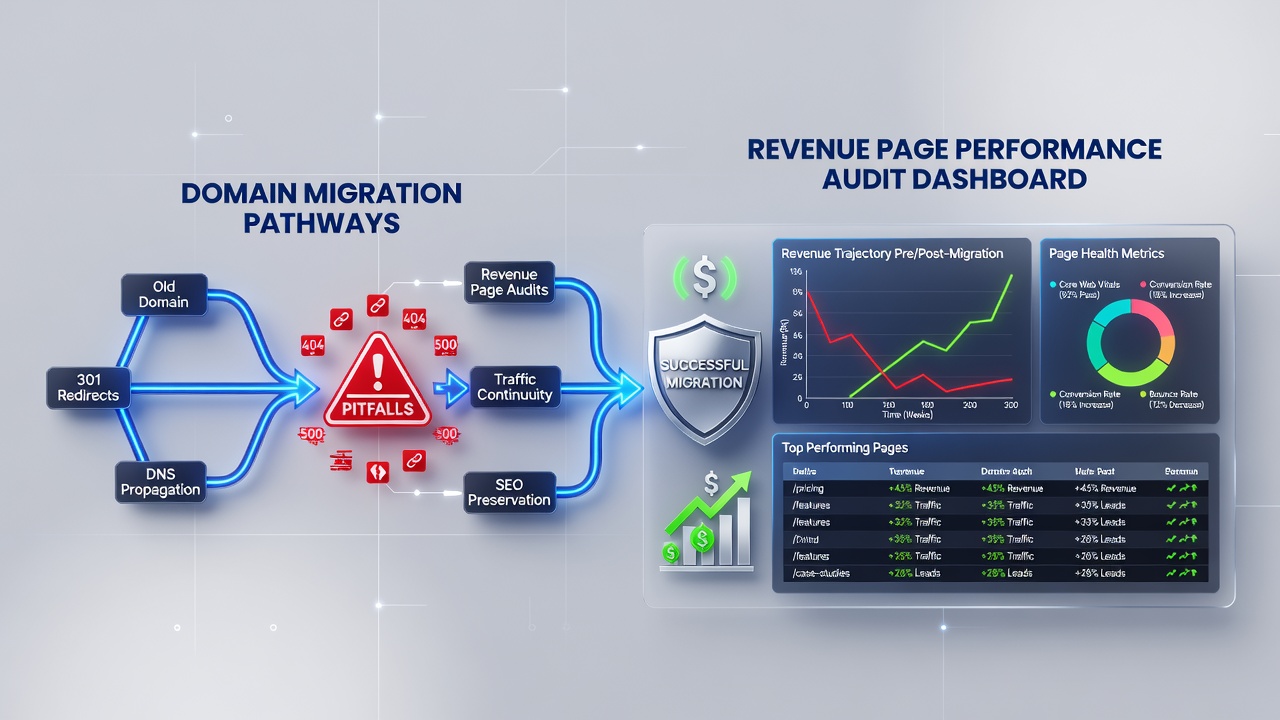
Domain migrations often trigger unexpected disruptions in how search engines evaluate revenue-focused pages, and performance audits provide a structured way to identify those issues before they compound. Experts have observed that changes in registrar or hosting infrastructure can alter crawl rates, indexation signals, and user engagement metrics that directly influence ad or affiliate revenue streams. Data from multiple industry reports indicates that sites undergoing such transitions frequently experience temporary drops in organic traffic to money pages, with recovery timelines varying based on the thoroughness of pre- and post-migration checks.
Common Technical Shifts During Registrar Changes
Registrars handle DNS propagation and WHOIS updates differently, which creates variations in how quickly search engines recognize new ownership details or server locations. One study revealed that incomplete propagation leaves some revenue pages accessible via old nameservers while others resolve through updated records, producing inconsistent crawl data. Researchers discovered that these inconsistencies extend to structured data markup, where schema for product pricing or subscription offers fails to render correctly on migrated pages, reducing click-through rates in search results. Observers note that tracking parameters embedded in affiliate links also break when canonical URLs shift without corresponding updates in analytics configurations.
Role of Revenue Page Audits in Identifying Indexation Gaps
Performance audits focused on revenue pages examine Core Web Vitals alongside indexation status to pinpoint where migration has introduced latency or rendering problems. According to figures released by the Australian Communications and Media Authority, sites that conducted targeted audits before full cutover maintained higher retention of indexed revenue pages compared with those that skipped such reviews. Those who've studied migration patterns know that pages generating subscription income or display advertising often rely on specific JavaScript libraries whose load times degrade after domain transfers if caching headers are not replicated exactly. Audits catch these discrepancies by comparing pre-migration and post-migration waterfall charts, revealing where third-party scripts for conversion tracking add unexpected delays.
September 2026 Infrastructure Updates and Their Impact
Industry observers expect several major registrars to roll out mandatory DNSSEC enhancements in September 2026, which will require revenue page operators to verify that their new hosting environments support the updated cryptographic records. Failure to align these settings can delay re-crawling of high-value pages that display dynamic pricing or limited-time offers. Data indicates that pages carrying revenue-generating content suffer greater visibility loss when DNSSEC mismatches occur because search engines treat the inconsistency as a potential security signal and reduce crawl frequency accordingly.
Linking Performance Metrics to Revenue Outcomes
Audits that tie page speed data directly to revenue events show how increased time-to-interactive scores after migration correlate with lower conversion rates on checkout or lead-gen forms. One case involved a site that moved its primary domain and later found that mobile revenue pages experienced a measurable drop in scroll depth because image optimization settings had not transferred. Experts have observed that re-auditing these pages within 48 hours of the move allows teams to restore original performance baselines before search rankings adjust permanently. What's interesting is that revenue pages often contain more embedded media and tracking pixels than informational content, making them particularly sensitive to any change in server response headers or content delivery network routing.
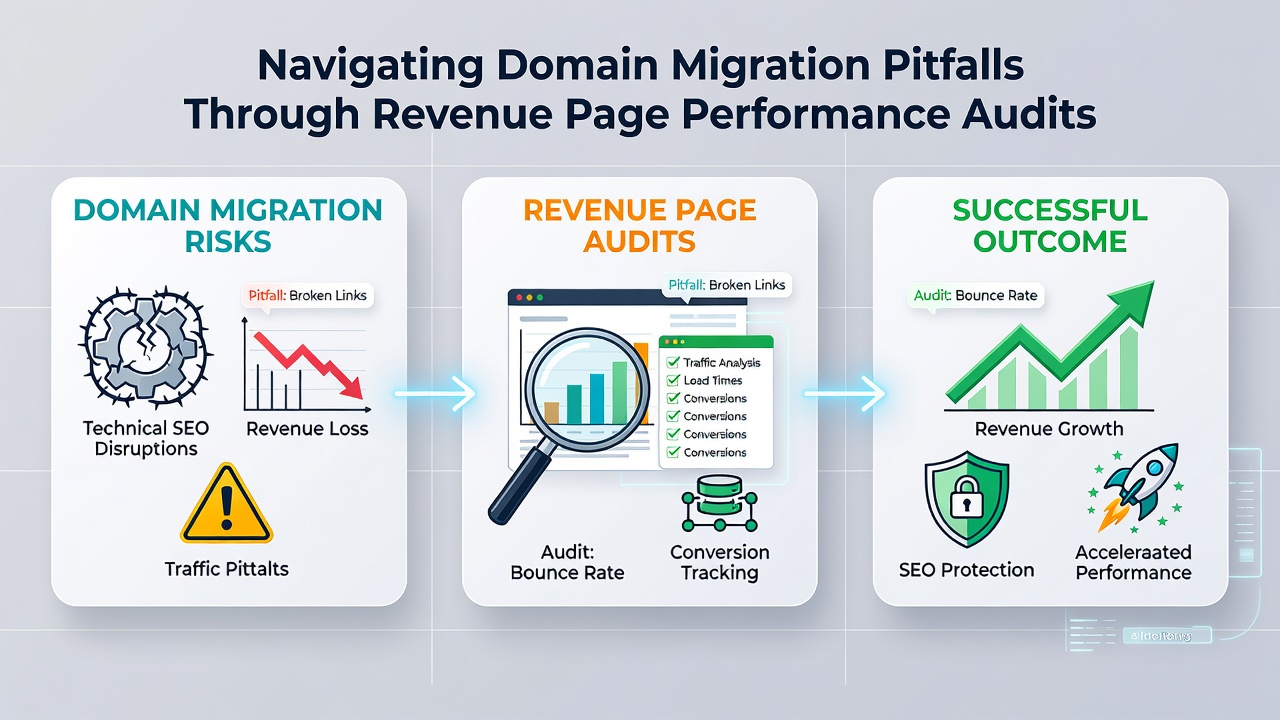
Studies found that combining server log analysis with real-user monitoring during the audit phase uncovers redirect chains that silently erode authority passed to money pages. Those chains frequently arise when legacy subdomains are not updated to point to the new primary domain, leaving affiliate tracking links pointing to non-existent resources. Research indicates that systematic removal of such chains restores both crawl efficiency and the accuracy of revenue attribution models used by marketing teams.
Case Examples from Recent Migrations
Take one research team that documented a European e-commerce platform's registrar switch in early 2025; their post-migration audit identified that product pages with embedded revenue scripts lost 18 percent of their previous mobile speed score until compression settings were realigned. Another instance involved a North American publisher that discovered duplicate content signals between old and new domain versions because canonical tags pointed to the pre-migration URLs. The audit process corrected these tags before the September indexing refresh cycles, preserving the pages' positions in competitive search verticals. Observers note that sites relying on performance budgets for advertising revenue benefit most from these audits because even minor increases in load time can shift pages below the fold in search results that emphasize user experience signals.
Best Practices for Structuring Audit Workflows
Effective workflows begin with a baseline audit of revenue pages on the original domain, followed by identical testing immediately after DNS cutover and again at 7-day and 30-day intervals. According to a report from the Internet Corporation for Assigned Names and Numbers on domain management practices, maintaining consistent nameserver configurations across both old and new registrars reduces the window during which search engines encounter conflicting signals. Teams that incorporate automated alerts for indexation changes in revenue page directories catch problems earlier than those relying solely on manual reviews. Data shows that integrating these alerts with existing analytics platforms allows revenue impact to be quantified in near real time rather than discovered weeks later through declining campaign performance.
Conclusion
Domain migrations introduce measurable risks to revenue page visibility and performance, yet structured audits focused on speed, indexation, and tracking integrity provide the data needed to address issues promptly. Reports from various regulatory and research bodies confirm that organizations applying these methods experience shorter recovery periods and more stable revenue streams following the transition. Continued monitoring through September 2026 and beyond will remain essential as infrastructure standards evolve.