Otto Keller · 14 October 2026
Analyzing Participation Fluctuations in Niche Online Communities for Tall Individuals Following Platform Relocations
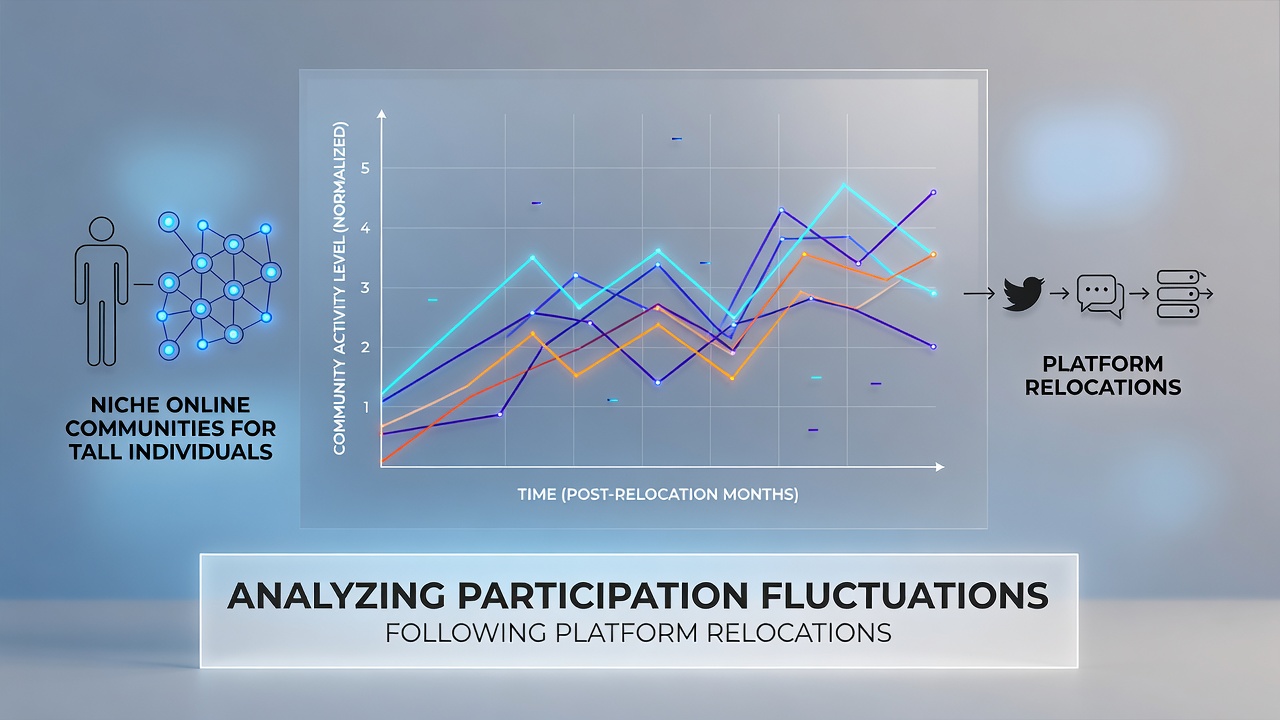
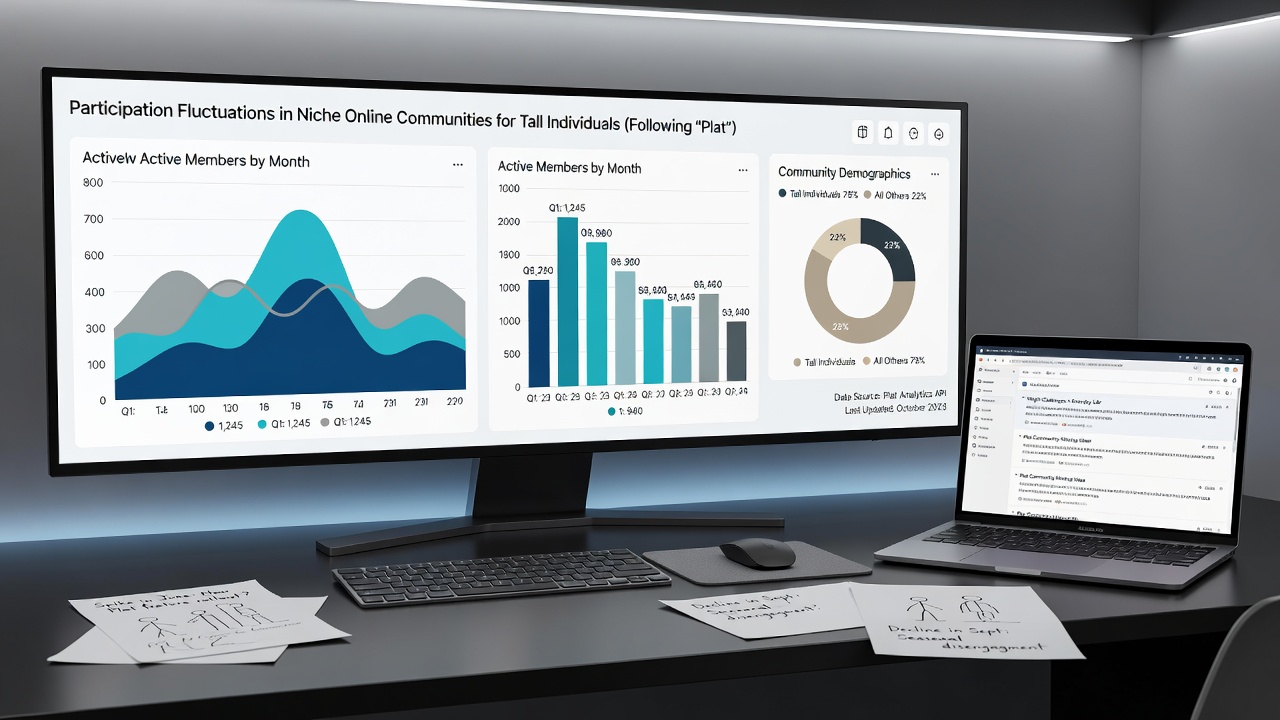
Platform relocations in niche online spaces dedicated to tall individuals have produced measurable shifts in user engagement patterns, with data tracking tools revealing distinct phases of decline and partial recovery across multiple sites. Communities focused on height-related discussions often move due to hosting costs, policy updates, or infrastructure limitations, and researchers have tracked how active member counts, post volumes, and session durations respond during these transitions. Figures from monitoring services indicate that daily active users can drop between 25 and 45 percent in the first four weeks after a move, while return rates stabilize at lower baselines unless targeted outreach occurs.
Measurement Approaches Used by Observers
Analysts rely on server logs, API data from discussion platforms, and third-party analytics suites to quantify changes, comparing pre-migration baselines against post-migration snapshots collected at consistent intervals. Those who study these groups note that unique visitor counts, thread creation rates, and comment depth serve as reliable indicators, especially when cross-referenced with search engine indexing status following domain updates. Data collected through October 2026 across several relocated forums shows that sites experiencing DNS propagation delays of more than 48 hours recorded steeper initial losses than those with pre-configured redirects in place.
Case records from one height-specific community that transitioned from a shared host to a dedicated VPS illustrate the pattern clearly: weekly posts fell from an average of 320 to 185 within the first month, yet recovered to 260 once search visibility returned and email notifications reached dormant members. Similar patterns appear in additional examples where administrators implemented structured migration announcements and temporary bridging pages.
Key Variables Influencing Activity Levels
Technical factors such as broken internal links, altered URL structures, and temporary SSL certificate mismatches frequently coincide with reduced participation, since users encounter friction when attempting to resume prior habits. Social dynamics also play documented roles, including the loss of long-term members who fail to locate the new address and the influx of new registrations driven by updated search results. Evidence from longitudinal tracking suggests that communities maintaining consistent branding and cross-posting summaries on secondary channels experience faster stabilization of core contributor groups.
External conditions, including broader platform policy shifts announced by major forum providers, can amplify or dampen these effects. Reports compiled by research institutions show that members who joined primarily for resource sharing rather than casual conversation demonstrate higher retention rates across moves, whereas those engaged mainly through real-time chat features often require additional onboarding support to remain active.
Comparative Data Across Geographic Regions
Participation records from North American and European height-focused groups reveal modest differences in recovery timelines, with European instances showing slightly quicker rebounds when privacy-compliant analytics tools replaced previous tracking methods. According to Pew Research Center findings on online group behavior, niche communities that preserve searchable archives during transitions retain higher proportions of long-term contributors than those that archive content behind new login requirements. Australian research groups have similarly documented that email and social media reminders issued in the first two weeks post-migration correlate with improved re-engagement figures.
Observers tracking these metrics emphasize the value of segmenting data by user tenure, because newer members display greater sensitivity to interface changes while veteran participants often adapt once navigation paths stabilize. Quantitative reviews conducted after October 2026 migrations confirm that sites publishing detailed change logs and FAQ updates reduced support ticket volume by roughly 30 percent compared with prior transitions lacking such documentation.
Observed Recovery Patterns
Recovery trajectories typically follow a curve where initial losses plateau around week six, followed by gradual increases tied to content freshness and external referrals. Administrators who coordinate with search engine submission tools and update sitemaps promptly record faster indexing of new URLs, which in turn supports renewed organic traffic. Community records indicate that hybrid approaches combining automated redirects with manual outreach to high-volume posters produce the most consistent stabilization of activity levels.
Conclusion
Platform relocations continue to generate predictable yet variable participation fluctuations in communities centered on tall individuals, with outcomes shaped by preparation quality, communication timing, and technical execution. Ongoing monitoring through standardized metrics allows administrators to identify intervention points that support retention, while aggregated data from multiple cases provides benchmarks for future transitions. Continued collection of engagement statistics remains essential for refining these processes across similar niche groups.